
I am trying to gather all the ingredients necessary to cook up an impactful career in food science. Many tribal lands today are classified as food deserts — areas where grocery stores are scarce. The alternative is typically convenience stores stocked with products that aren’t fresh and nutritious or likely to be on a shopping list for traditional cuisine. Food is much more than calories: it connects us to each other, to the Earth, and to ceremony. Food science, therefore, is vital to advancing tribal resilience and sovereignty. So I have been building a solid foundation for a professional career dedicated to working toward those goals.
I am Ojibwe and grew up on the Fond du Lac Reservation in northeast Minnesota — a tight-knit community that cares deeply for one another and has shown resilience through many challenges, never losing its sense of pride. Successes are celebrated communally, and individual hardships are met with support from the entire community. Through this upbringing, I learned that home is not merely geographic; it’s a feeling of safety and being loved for who you are. Growing up here I learned the importance of belonging, compassion, and shared strength. My family life mirrors the warmth and support of my community. They’ve taught me that true success isn’t measured by awards or recognition, but by the difference you make in the lives of others.
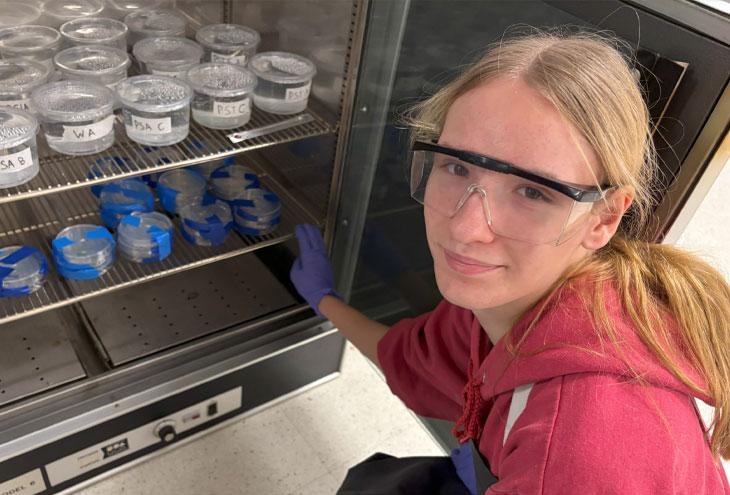
I am a junior at Cloquet High School, a small school in northern Minnesota near Fond du Lac that nurtures individuality as much as my tribe and family do. Science, and especially chemistry, classes have broadened my understanding of the world and how I can help shape it — but it was participation in science fairs that brought everything into focus, teaching critical-thinking skills I could apply to every part of life. In 2025 I came home from the Minnesota State Science and Engineering Fair with a 3M Young Inventor Recognition prize for my project comparing capsaicin with traditional antibiotics and disinfectants.
I’ve participated in science fairs since seventh grade, and I found that succeeding in my projects helped me regain lost confidence, develop my love for research, and formulate my career goal: to pursue food science and chemistry to increase the quality and accessibility of food — without leaving my culture behind. I want to bridge the gap between traditional knowledge and modern research, to show that they can work together to create something beautiful and lasting.
Despite a welcoming environment, school hasn’t always been easy. Feelings of being an outsider occasionally distracted me, but I have overcome them by strengthening my connection to my Indigenous culture and identity. I’ve learned that even when things feel impossible, you can find strength in your roots, your family, and your purpose.
Now I am navigating the challenges of getting into college, and like many students I have found that sometimes the biggest barrier is self-doubt. I’ve had to work through a lot of uncertainty — wondering if I am good enough or capable enough to make it. But with the support of my family, community, and school, I am trying to build on my own perseverance and compassion, which have been the keystone of my success. I care deeply — about people, the planet, and making things better. I want to use my empathy as fuel for action.
Another factor in my accomplishments so far has been AISES. Joining AISES has proven to be one of the best decisions of my life — and one that will surely help make my dreams a reality. Attending the AISES National Conference in Minneapolis made me realize that I’m not alone. I’m part of a growing community of Indigenous thinkers and innovators who are shaping the future together.