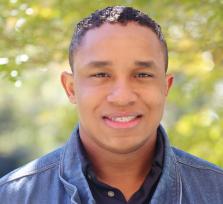

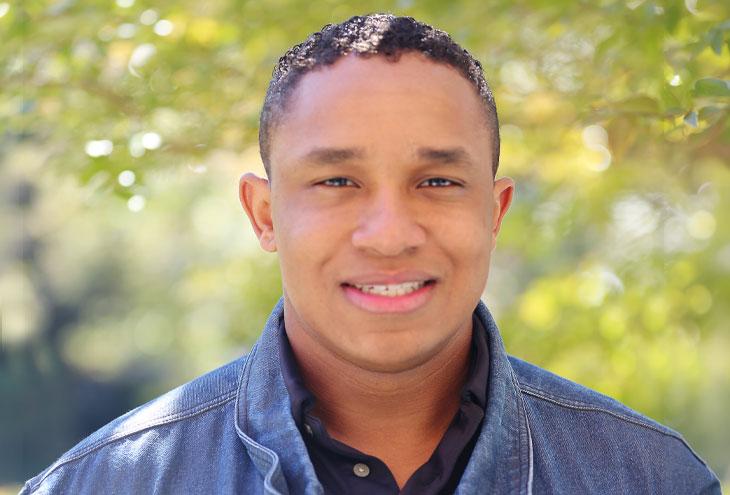
The lush Shenandoah Valley, which I’m grateful to call home, offers the perfect place for my family to garden, forage, and cook our traditional foods. Although far from our Choctaw community, I sought out opportunities to learn more through visiting family. My sister and I also grew up around traditional foods, like our heirloom squashes and corn, and those experiences grounded my understanding of Indigenous foodways from an early age.
During the summers, our parents enrolled us in language, robotics, and art programs supported by government funding for rural communities, which nurtured my interdisciplinary bent and desire to learn more. I went on to earn an engineering degree, but my passion for the arts led me to pursue a master’s in creative technologies. That blending of disciplines now frames my path to a PhD in agricultural leadership and community education. It all came together organically through the relationships I built with the Monacan Indian Nation and Virginia Tech, which stands on the tribe’s traditional homelands.
At Virginia Tech, I manage the Indigenous Community Garden, a space for growing heirloom seeds, for student learning, and for tribal members to gather. I’m grateful for the mentorship of Victoria Persinger Ferguson, a Monacan elder who has taught me so much about Virginia ethnobotany and how to use the garden as a space for foraging, cooking, and encouraging cultural exchange.
My current research focuses on regenerative agriculture in Indigenous food systems with an emphasis on land-grant institutions supporting these initiatives. I have witnessed a lack of effort from the land-grant universities I’ve attended, and I’m committed to changing that narrative. Being deeply involved with the Indigenous Community Garden has opened doors for me to provide technical assistance and agricultural programming to the Monacan Indian Nation. It has been deeply meaningful to serve the communities whose homelands I am studying and where I spent much of my life growing up.
Building on that work, I’m now finding ways to merge my programming and coding skills by creating virtual simulations that allow Monacan tribal members to explore their traditional foods while learning their language. I’m doing this utilizing lidar scans of the garden and the heirloom crops to build an interactive digital space where community members can engage with this knowledge on-site and online.
I served as the Virginia Tech AISES College Chapter’s first chapter president from 2022 to 2023 and currently am the president of Native at VT, the oldest Native student organization at Virginia Tech. I’ve had the incredible opportunity to bring several students to their first AISES National Conference. I wanted to give back to other students, and I know how impactful AISES has been in supporting me. Since joining AISES in 2021, I had opportunities to present at conferences, meet with mentors, and network with like-minded Native scholars who share my passions for regenerative agriculture and food sovereignty. AISES is very much a family.
Being part of AISES has opened doors for me, like serving as one of the youngest board volunteers on the Food and Health Committee for the Native American Food Sovereignty Alliance. This opportunity gave me a space to freely share my thoughts and be embraced by people I view as superstars. Being part of this organization also gave me a platform to work for a broader definition of food sovereignty. Beyond the given definition of accessibility, nutrition, affordability, locality, and culturally relevant, there is more to what food sovereignty means.
I emphasize this type of work at land grant universities because they have the resources and responsibility to help tribal nations. I strongly value the consensual and reciprocal aspects of food sovereignty. We must ask whose land are we using? Are you engaging in a reciprocal relationship with the land? The reciprocity of knowledge is the heart of my work, and I gladly share it with the Virginia tribal communities.
My grandfather’s mantra — take space to make space — guides me today. Be confident in who you are and the community you come from. Take the opportunity to experience and learn, and then make it easier for others in your community to experience it for themselves. By honoring those who came before us and acknowledging the interconnectedness Indigenous people have with food systems, we can continue to empower our communities for generations to come.