-
Soft Skills for Success
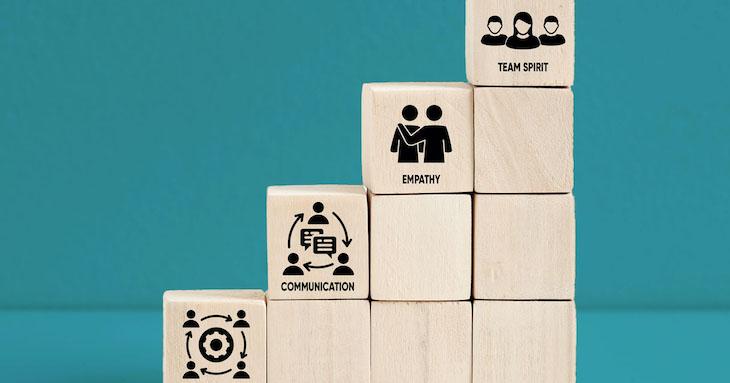
So much of your time and energy leading up to the early years of your career is spent learning and perfecting the skills needed for the job. Often — especially in STEM fields — those skills can be specific and require much hands-on training. But in order to achieve long-term success in any career, you must also develop soft skills. In fact, these transferable skills — skills that you apply to any job — are what hiring managers are seeking in their employees. Regardless of where you are on your career path, be sure to continue developing these vital skills.
-
The Importance of Self-Care
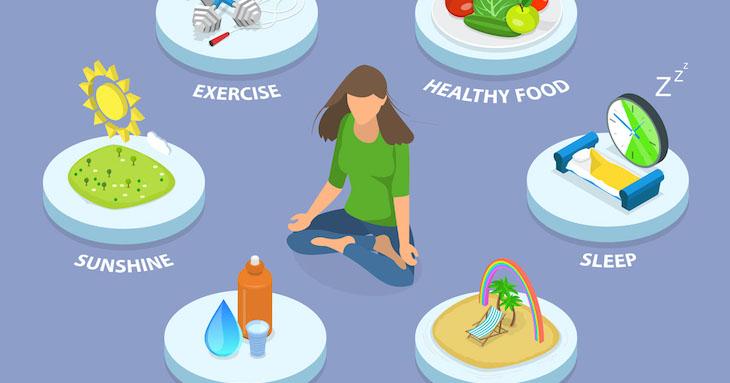
College students are often consumed by classes, extracurriculars, relationships, and other daily commitments. The hectic schedule can be stressful and leave little time for students to take care of themselves. But the importance of self-care can’t be denied. Taking time for yourself can yield a healthier and more enjoyable college experience. Here are a few reasons why self-care is so important.
-
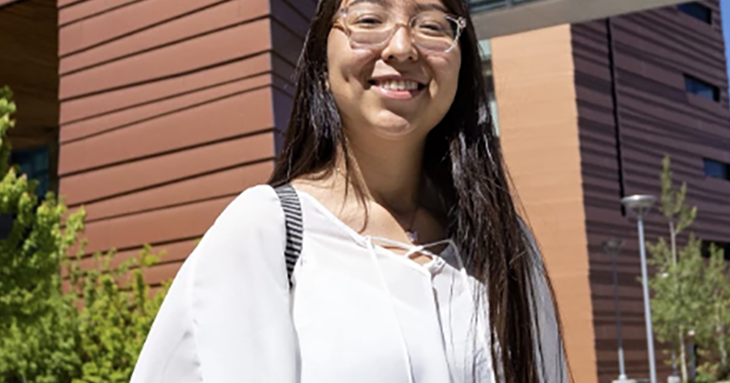
Beyoncé Bahe | White Mountain Apache Tribe | Northern Arizona University
I grew up on the Fort Apache Indian Reservation in a family that has always had a connection to our community. It’s a large part of why I want to become a doctor and get my master’s in public health: I want to serve my community and be a part of it in an even greater aspect. Now, I’m a first-year senior at Northern Arizona University (NAU), on a five-year track with NAU’s Interdisciplinary Global Program (I’m in my fourth year studying at Kyushu University in Fukuoka, Japan), majoring in biomedical sciences and comparative cultural sciences.
-
How to Manage People in Uncertain Times
While supervising a staff is not necessarily easy, managers typically find their groove after some time. In times of uncertainty, however, managing people can become much more challenging. As the manager, you’re expected to successfully guide your team through any uncertainty. Here are a few tips to help do just that.
-
How to Balance Family Expectations with your Personal Goals
As a child, your goals and expectations may closely align with your parents’. As you get older, you may find that your personal goals begin to differ from your family’s expectations. When that happens, it can create tension in your relationship with your family, and your parents in particular. Here are a few tips to help balance family expectations with your personal goals.
-
The Value of Extracurriculars
It’s no secret: grades matter and striving for personal academic excellence is the job of every student. But it’s important for individuals to develop outside the classroom too. Parents often begin this process, registering their young children for activities such as tiny-tot dance classes, town sports teams, and Lego clubs.
-
Navigating Politics on Campus
Whether you’ve been on campus for a month or years, it’s probably safe to say that you’ve met a diverse group of people. Not only may these people be of different races, genders, and ages, they may also have varying political views. Politics can be a difficult area of discussion, but healthy, productive conversations are possible. Here are a few ways to navigate politics and the current social climate on campus.
-
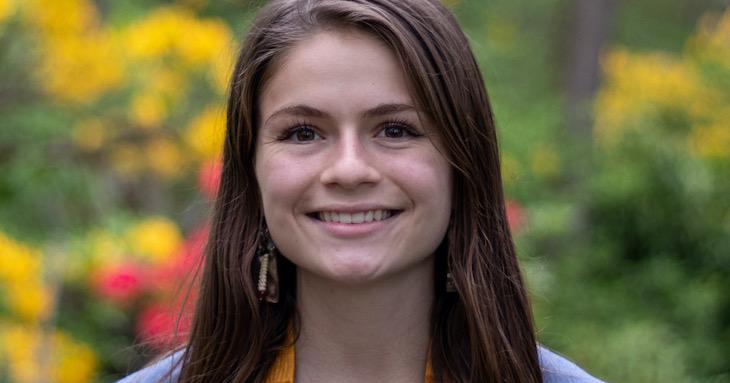
Temerity Bauer | Round Valley Indian Tribes | University of Oregon Clark Honors College
When most people say they want to be a doctor or researcher, they often imply that their parents forced them into it. My parents are professors of history — boy, were they surprised when I came out loving math and science!
-
Michael Martinez | Yup’ik | University of Alaska Anchorage
Rare earth elements (REEs) are vital in medicine, electronics, renewable energy, and communications. But extracting REEs is environmentally stressful, with multiple potential supply chain problems. To address this, I created Arctic Biotech Oath (arcticbiotechoath.com), a start-up to develop sustainable biotechnology to extract REEs from mine ore and tailings using microorganisms in a circumneutral pH rather than highly acidic compounds common to traditional techniques.
-
Julia Doucette-Garr | English River First Nation, Cree, and Métis | University of Saskatchewan
I started out at the University of Saskatchewan in biochemistry. For that major, physics was a prerequisite. Although I had taken physics in high school, it wasn’t my favorite subject. I liked biology and chemistry, but the reading in those courses became overwhelming. Physics, on the other hand, included lab work. We learn theories, and then in the lab, we see those theories in action. That helped me understand the material better, and I decided to switch my major to physics.