-
The 2026 AISES National Conference Gets Underway October 15
Pack Your Bags for Portland!
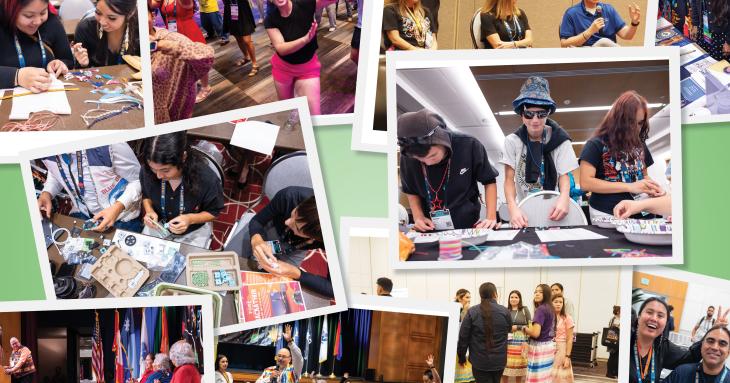
This year's much-anticipated AISES National Conference is coming up in Portland, Ore., October 15 to 17. Throughout the three-day event, the conference theme — Weaving Innovation — will be playing out at lecterns, on stages, and in lively conversations.
-
Celebrating the NAISEF Difference
It’s the Only National Science Fair Supporting the Bright Future of Indigenous STEM
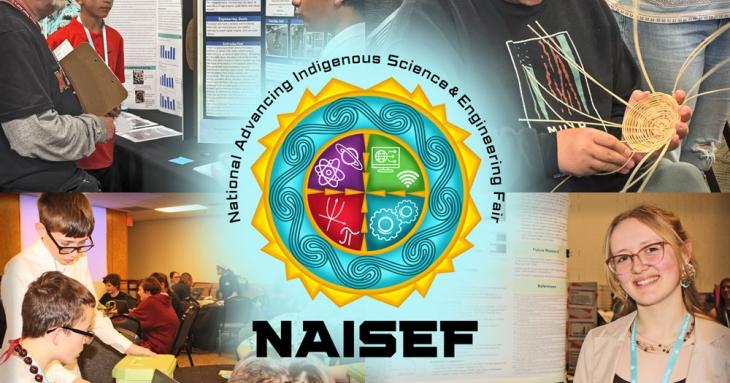
If you want to feel optimistic about the rising generation, come to NAISEF (the National Advancing Indigenous Science and Engineering Fair). This unique event offers students in grades five through 12 an opportunity to show off their research projects, and just as important, meet each other and articulate their findings. It’s the place to go to witness the promise, perseverance, and creativity of aspiring young Native scientists. -
UNIVERSITY OR … Something Different?
The Case for Two-Year College and Career Certificate Programs
The road to higher education is paved with decisions that guide — and sometimes reroute — students to their destination. Finding the right path might seem overwhelming, but breaking the miles into smaller steps can help, and for many students, starting at a two-year school is a solid beginning.
Benefits of community college
-
How to Be a Comfortable Communicator
Tips for being more effective at sharing news, proposing ideas, and asking questions
You spend a lot of time communicating —maybe more than you realize. And how you communicate matters. Ultimately, it’s how you connect with other people. Whether you’re composing a message, speaking up in class, or having a one-on-one conversation, you’ll be more effective if you feel comfortable in your approach. There is no single “right” way to do it. Instead, the goal is to develop a style that works for you with the people in your life. As with any skill, it takes practice.
-
First Nations Launch Takes Off
The First Nations Launch (FNL) program is not just about building rockets — it’s about building futures. In fact, FNL is transforming the aerospace landscape for Indigenous students. What began with a few tribal colleges has evolved into a dynamic program that fosters talent across 96 tribes, 44 institutions, and 19 states, with participants from Canada testing their skills as well. Blending technical challenges, professional networking, and cultural integration, FNL has become a powerful force for Indigenous representation in STEM.
-
Aaron Yazzie | Technical Excellence Awardee | Navajo
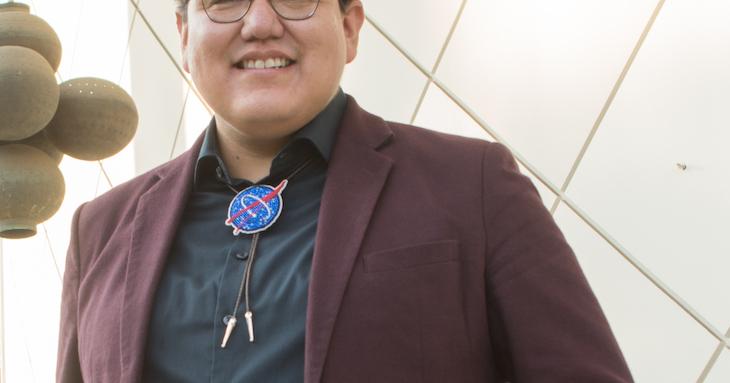
Aaron Yazzie shares many of the questions a lot of us have about the planet Mars. “Mars was once similar to Earth,” he says. “It once had water and was warmer as an early planet. It developed over billions of years in similar ways to Earth, but the question is, why did Earth develop life and Mars didn’t? Or maybe it did?”
-
Tobin Beal | Executive Excellence Awardee | Choctaw Nation
When Tobin Beal was living in China and working as the CIO for General Motors (GM), he had an extraordinarily long to-do list. Among many other tasks, Beal was charged with developing information technology strategies and sales and marketing solutions to support the automaker’s success in a vital market and with its many joint venture partnerships with Chinese companies.
-
Leona Anderson | Blazing Flame Awardee | Cherokee Nation
When Leona Anderson was a young girl in Los Angeles, she knew she was part Native American, as her father always told her this. Her father was born and raised in Broken Arrow, Okla., and he would visit his hometown for a month each summer and visit the Cherokee Nation in Bixby, Okla., to spend time with his sister. Her father’s visit was about reconnecting with his sister, but it was also about providing her with much needed assistance. “My dad would help her with projects around her house and garden,” says Anderson, this year’s winner of the Blazing Flame Award.
-
Dr. Josiah Hester | Most Promising Engineer or Scientist Awardee | Native Hawaiian
Long before Dr. Josiah Hester became a tenure track professor in Northwestern University’s Departments of Electrical and Computer Engineering and Computer Science, his parents taught him to understand the connection between computing and a secure life. “My parents saw that computing generally is your ticket,” says Dr. Hester, Native Hawaiian (Kānaka maoli), who remembers how his mom and dad started him learning the Java programing language.

Featured Stories
From Winds of Change Magazine and Paths to Opportunities Newsletters