-
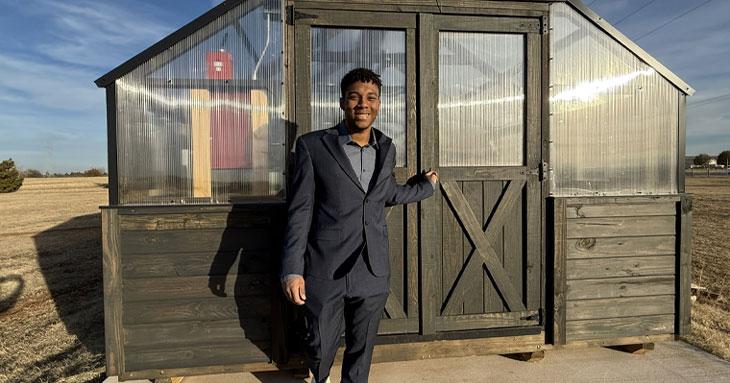
ZACHARY DAVIS | CHEROKEE NATION | HERITAGE HALL HIGH SCHOOL
It was a Tuesday morning like many others, until I turned on the TV and saw the news coverage of the Hawaii wildfires. Seeing the devastation caused by the wildfires, I was determined to help, and the Hawaii wildfire project and my path through the sciences solidified that night. Now, I am a senior at Heritage Hall in Oklahoma City. I’ve used my time there to hone my interests, and I’m excited to explore the areas of plant science and microbiology in college.
-
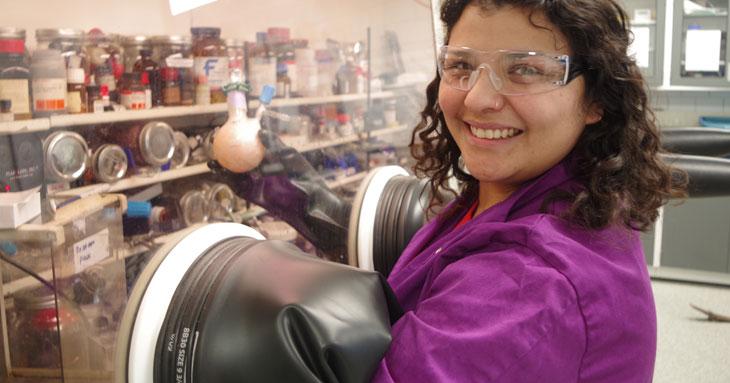
GENIEVIEVE BORG | ANISHINAABE | UNIVERSITY OF GUELPH
My research focus is molecule-based magnetic materials — we make different molecules that demonstrate “magnetic memory.” If we alter the temperature, pressure, or magnetic field, bonds on the molecular level can break and reform. The science is applicable to technological advancements, such as materials in computer chips.
-
BRYCE ALEXANDER BURRELL MISSISSIPPI BAND OF CHOCTAW INDIANS VIRGINIA TECH | Agricultural Leadership and Community Education
The lush Shenandoah Valley, which I’m grateful to call home, offers the perfect place for my family to garden, forage, and cook our traditional foods. Although far from our Choctaw community, I sought out opportunities to learn more through visiting family. My sister and I also grew up around traditional foods, like our heirloom squashes and corn, and those experiences grounded my understanding of Indigenous foodways from an early age.
-
CHARITIE ROPATI YUP’IK AND SAMOAN | COLUMBIA UNIVERSITY | Civil Engineering
From the time I was a young girl, I’ve wanted to help my people, the Yup’ik. Our remote Native village, Kongiganak, is in Southwest Alaska just a few miles from the Bering Sea. Living near the Kuskokwim River, which empties into the sea at the Yukon-Kuskokwim Delta, I saw that engineering solutions can play a critical role in preserving our lands, our homes, and our way of life.
-
Cover Letter 101
If you’re looking for a new position, it’s time to dust off the resume and scour job postings. In addition to an updated resume, many applications also require a cover letter. While these letters can seem redundant or just extra work, they are a useful tool to help sell yourself and your skills. Here are some tips for writing an effective cover letter.
Understand the Significance -
Is Grad School Right for You?
Whether you’re preparing for the final semester of college or you graduated years ago, the overwhelming question of whether to attend graduate school may occupy your mind. There’s no easy answer. You’ll need to spend some time considering your career goals and determining if an advanced degree could help you attain them. Here are some things to keep in mind as you decide if grad school is for you.
Identify Your Goals -
The Gift of Feedback
We’re not always expecting it, but receiving criticism — or praise — is a skill that can be improved with practice. Often the prospect of conversation involving feedback can be daunting. Providing and receiving effective feedback is something you have to learn and work on as you build your career. Here are some tips for using feedback successfully.
-
Tips for Academic Success
First things first — your grades are not an indication of your intelligence. That said, if you’re not getting the grades you want, there are some simple ways to get there. Earning high marks is about working smarter, not harder. Do that, and you’ll find that getting better grades is easier than you thought.
Study Your Own History -
How to Have Difficult Conversations
Whether it’s addressing a conflict with a friend, providing constructive feedback at work, or discussing sensitive topics with family members, difficult conversations are inevitable. Especially at work, where you must continue to work together smoothly and cooperatively, being able to have difficult conversations is an important skill. These conversations can be challenging, but with the right approach, they can lead to positive outcomes and stronger relationships. Here are some strategies to help you navigate difficult conversations effectively.
-
Preparing for a Performance Review
For most professionals, this is the time of year when performance reviews come up. Whether your review takes place once a year or more often, it’s not unusual to have some apprehension about the process and the actual meeting. But instead of stressing over your performance review, look at it as an opportunity to speak directly with management about topics that matter to you. If you prepare thoroughly, you can walk into the meeting with confidence. Here are a few tips for getting there.